

This November, a Tennessee couple will walk into a home built entirely around their needs — no stairs to fear, no narrow hallways to navigate, just space designed for freedom. For Joe Bowser, a wounded Army veteran, that moment has been two decades in the making.

Gary Sinise with Iraq war vet Sgt. Joe Bowser.
Credit : Michael Tullberg/Getty; Gary Sinise Foundation
The Milestone
The house represents something bigger than one family’s new beginning. It’s the 100th custom-built home handed over by the Gary Sinise Foundation, the nonprofit run by actor Gary Sinise that supports veterans, first responders, and their families through housing, mentorship, and community programs.
Reaching triple digits is a milestone the foundation takes seriously, but it’s not one they’re celebrating without perspective. Behind every home is a story of sacrifice — and a reminder that demand for this kind of support hasn’t slowed down.
Twenty Years of Saying “No”
What makes Bowser’s story stand out isn’t just the injury he survived — it’s how long he refused help.
Bowser, now 65, served in the U.S. Army and later rejoined as a reservist after the September 11 attacks. In 2004, four months into deployment in Iraq, a rocket attack left him with injuries severe enough that doctors couldn’t save his leg. He chose amputation so he could stay active — he still plays recreational hockey today.
Not long after, he crossed paths with Gary Sinise, who had built a career-defining connection to veterans through his role in Forrest Gump. The two became close friends, a bond that deepened further after they each lost a son to cancer within months of each other.
Despite that friendship, whenever the topic of a foundation-built home came up, Bowser turned it down — every time, for almost 20 years. He always insisted someone else needed it more.
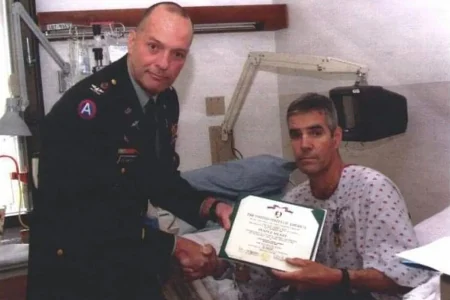
Joe Bowser accepting a Purple Heart in 2004.
Credit: Joe Bowser
Living With a House That No Longer Fit His Life
Part of what makes the new home so significant is what Bowser and his wife, Michele, are leaving behind: a house built in the 1800s, with hallways too narrow for a wheelchair and a second floor that had become genuinely dangerous. Both of them had fallen on those stairs more than once.
For someone who relies on a wheelchair whenever he isn’t wearing his prosthetic leg, that layout wasn’t just inconvenient — it limited his independence inside his own home.
Why the Foundation Doesn’t Rank Sacrifice
According to Sinise, one of the biggest misconceptions veterans have is believing they need to be injured “enough” to qualify for help. He pushed back on that idea directly, explaining that the foundation’s decisions are based on need and impact, not on how severe an injury looks on paper.
That philosophy is ultimately what convinced Bowser to finally accept the offer.
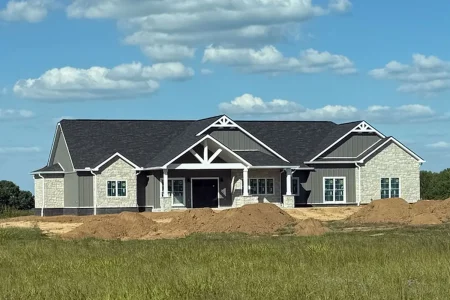
The Bowsers’ new Tennessee home will be dedicated Nov. 18.
Credit: Gary Sinise Foundation
Inside the New Home
Set near Fort Campbell Army base, the new single-story home spans roughly 3,000 square feet with three bedrooms — and every detail was designed around accessibility. Hallways are wide enough for a wheelchair to move through freely, the shower includes a heated bench, and the cabinets sit low enough to reach without leaving the chair.
For Bowser, the change represents more than comfort. It’s the ability to move through his own home without having to ask for help.
The Bigger Picture
Sinise founded his organization in 2011, driven partly by how differently veterans were treated after Vietnam — often coming home to little institutional support. Building homes for wounded veterans became one way to make sure that history didn’t repeat itself.
Still, hitting the 100-home mark comes with a caveat Sinise was quick to point out: the number reflects real progress, but also a reminder that the need remains far from over.
Source: This article is based on original reporting published by PEOPLE magazine.
Thank you for continue reading please don’t forget to share this article with your freinds
SHARE


